Occupational Therapy (OT) Services
Comprehensive OT guidance covering hand skills development, prewriting activities, sensory processing, proprioception, concentration strategies, and referral criteria for functional daily activities
Paediatric Occupational Therapy Referral
The main referral form needs to be used (Barnet Child Development Team Referral).
Speech and Language Therapy, Occupational Therapy and Physiotherapy Teams.
- Address: Children and Young People Occupational Therapy, Westgate House, Edgware Community Hospital, Burnt Oak Broadway, HA8 0AD.
- Tel: 020 3316 8900.
- Email: whh-tr.barnetcit@nhs.net.
There are criteria for referrals to be accepted.
Occupational Therapy (CDT) Referral Criteria
A referral should be made to the Barnet Occupational Therapy (Health) Team when there is a functional concern regarding the child's ability to participate in the occupational performance areas:
- Play/leisure activities.
- Self-care.
- Nursery/school life.
The definition of function is "age-appropriate daily activities". The reason for referral on the referral form must therefore indicate more than one functional concern, relevant to the child's age, such as:
- Difficulty with using cutlery.
- Dressing/undressing.
- Making light snacks/breakfast.
- Participating in P.E. lessons or sporting activities.
- Handling play items.
- Physically manipulating/using school tools (such as scissors/glue sticks/writing tools).
Please note that our O.T. service does not accept referrals that only state the child is referred for:
- Fine motor difficulties.
- Behavioural problems.
- Sensory processing difficulties.
- Developmental Coordination Disorder (DCD)/Dyspraxia diagnosis.
These referrals will be returned to the referrer. The reason for referral must specify how these difficulties above are impacting the child's ability to perform daily activities (i.e. functional concerns).
We also do not accept referrals where only handwriting difficulties are highlighted and there are no other functional concerns identified. If there are handwriting concerns, then we would expect a school to be able to provide handwriting intervention. For older children with persistent handwriting difficulties, alternative means of recording work or compensatory strategies should be considered by the school.
Start Write, Stay Right
Start Write Stay Right is a complete handwriting approach for children, which works on the basis that firm foundations need to be established and good basic skills need to be in place before a child can work on functional and fluent handwriting. The programme works on developing core stability, shoulder strength, basic fine motor skills and early pencil skills (for colouring and other non-literacy activities) before the child can fully engage in the very complex skills of handwriting. A highly positive approach to build confidence and fill gaps which may have been missed in the ordinary classroom process of learning to write. Start Write Stay Right - Integrated Treatment Services.
Hand Skills for Children with Down Syndrome
Children with Down Syndrome are often referred to Occupational Therapy with concerns regarding their hand skills, particularly problems in the development of handwriting. Despite individual differences in learning abilities, there are some physical characteristics of the hands that are specific to the Down Syndrome population, and these have an impact on the development of hand skills.
The hands of people with Down Syndrome tend to be 10-30% shorter than the average population, and the fingers also tend to be relatively short. Bone ossification (hardening) tends to be a slower process, and in some cases, deformities or absences of the digits can occur. Children with Down Syndrome may have difficulty with oppositio,n as the thumb may be set lower on the hand and the fingers tend to be shorter. Pincer grasp (thumb tip to index finger tip) tends to develop late in children with Down Syndrome.
The bones in our hands are arranged in a particular way to enable our hand to form arches along both its length (longitudinal) and the breadth (transverse). These arches provide the curve of your palm that allows you to mould your hand around objects and enable your thumb to oppose (move around in an arc) to touch your fingers. The stability of these arches relies upon the small muscles of the hands (intrinsics). In a child with Down Syndrome, these muscles are often hypotonic (low tone,) and this will affect the child's ability to stabilise the fingers. Tone refers to the amount of resistance a muscle has to passive stretching. Instability of the fingers and decreased strength of the muscles of the thumb may affect the ability of children with Down Syndrome to hold, rotate and translate objects necessary in manipulation.
Function of the hand, however, relies on more than just the anatomical structures mentioned. Good hand skills are dependent on arm movement and stability, vision, sensation, motor planning and organisation to achieve function.
Inability to adapt grip forces to accommodate changes in the friction of object surfaces is related to poor sensory processing. People with Down Syndrome often have thick, dry hands that become rough with increasing age, therefore inhibiting the sensation of light touch in the fingers. The quality of touch discrimination will determine how effectively the child grasps and releases objects.
Children need to be encouraged to hold and explore toys with their hands to increase their understanding of their environment. The hands are also needed to bring toys to the mouth, which aids early and crucial exploration of their world and helps develop oral motor skills. The ability to engage in playful interaction using the hands is an important part of social development and understanding yourself in relation to other people and your environment.
Activities to improve overall muscle tone and shoulder stability, as well as eye-hand coordination, are important to include in play. Eye-hand coordination tasks should start with large objects and progress down to those that require increased precision. Objects that provide varied tactile (touch) input should be included, i.e. objects of different size, shape, texture, weight, and temperature.
As your child moves from nursery into reception, there are many activity ideas you can incorporate into home and school routines that will help maximise your child's hand skills..
Activities to Develop Postural Stability
- "Animal walks" incorporate walking on hands and knees.
- Push-pull games such as "row-row-row your boat".
- Wall push-ups - see if the child can "push the wall down" (with straight arms).
- Pushing heavy objects such as furniture around the room.
- Pushing objects in a toy trolley or a pram.
- Putting books up on a shelf.
- Carrying heavy objects where safe, e.g. shopping bags, library books, etc.
- Working on a vertical surface, e.g. painting at an easel or taping paper to a wall surface for colouring and pasting activities.
- Working on a vertical surface, e.g. painting at an easel or taping paper to a wall surface for colouring and pasting activities.
- Playing with magnets on the fridge.
- Playing with stickers on a large mirror.
- Encourage the child to wipe vertical surfaces - windows or blackboard.
- Hanging/climbing on playground apparatus.
- Jumping games.
Activities to Develop Hand Strength
- Use Play-Doh or plasticine activities; encourage the child to squeeze the "dough" in their hand and roll and pinch it into different shapes.
- Encourage the use of a sponge in the bath or water play, to squeeze.
- Squeeze soft balls, such as juggling balls or rolled-up socks, in the hands.
- Let the child try opening containers with screw on lids.
- Wringing out sponges or cloths.
- Push and pull games such as Lego/Duplo blocks, pop beads, and stickle bricks.
- Scrunching up paper into balls to throw at the target.
- Folding heavy paper or card into different shapes.
- Squeezing glue pens.
- Trigger toys such as water pistols, plant sprayers.
- Wind-up toys that provide resistance.
- Push button toys.
- Playing the keyboard/toy piano/organ.
Activities to Promote Bilateral Integration (Using Both Hands Together)
- Nursery rhymes that have hand actions.
- Ball games.
- Threading.
- Cutting and pasting.
- Cooking/baking tasks - mixing ingredients.
- Simple sewing cards.
- Hole punching.
- Playing musical instruments that require two hands, e.g. drum, tambourine.
- Posting objects into containers/shape sorters.
- Taking lids on/off containers.
- Water play - pouring and filling containers.
- Practising dressing oneself or dolls.
- Finger puppets.
Activities to Develop Pincer Grasp
- Use an eye dropper with coloured water to make pictures.
- Pinch along a length of Play-Doh with thumb and index finger.
- Picking up small objects such as beads, cotton wool, coins, small sweets, raisins - show your child which fingers to use and help them achieve this.
- Threading activities.
- Tearing paper into strips.
- Squeeze open the clothes pegs and place them on the container.
- Peg boards.
- Fuzzy felts.
- Play with pick-up sticks, toothpicks, and straws.
- Bending pipe cleaners.
Activities to Promote Sensory Awareness
- Identifying objects in a bag or pocket without looking.
- Messy play with finger paint, shaving foam, sand, clay, lentils, etc.
- Hide toys in a box of foam or in a box of dried lentils/pasta, and ask the child to try to find them.
- Cooking/baking activities using hands to mix ingredients.
- Make collages using various textures, e.g. wool, pasta, seeds, leaves.
- Play games blindfolded or with eyes closed, e.g. identify or find body parts using hands - nose, ears, eyebrows, fingernails on another person.
- Explore fabric books that have different textured pictures.
- Vibrating pull-string toys and bouncing toys provide strong input to the muscles and joints, as well as the skin.
Prewriting Activities
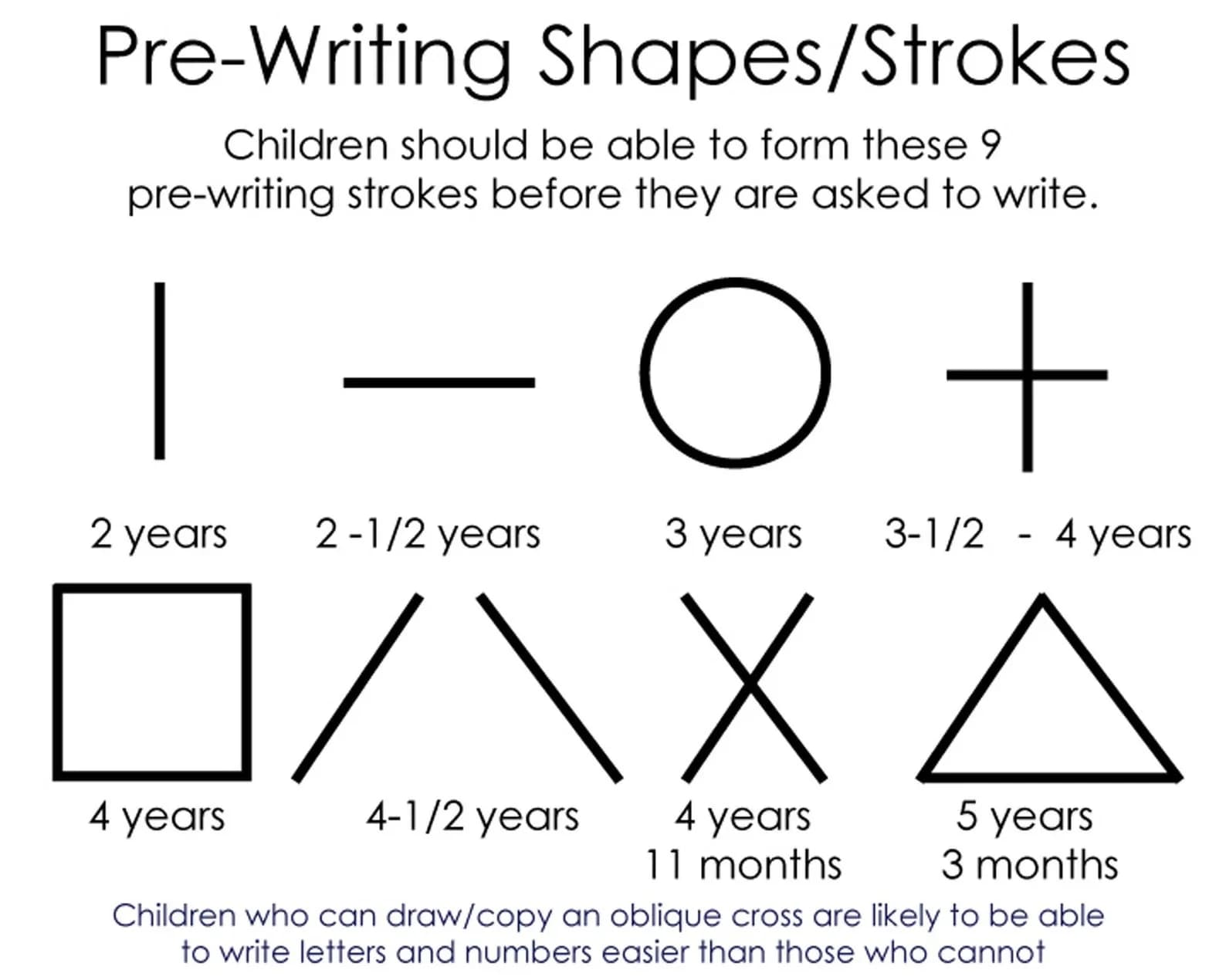
In order to hold a pencil in a tripod grasp, the child will need to have acquired a pincer grasp as well as the ability to stabilise the thumb and fingers against the pencil whilst the hand moves across the page. This is a very complex task that requires a high level of eye-hand coordination and is affected by many factors such as cognitive abilities, attention, posture, muscle tone and sensory processing. Before a child can learn to write letters, there are several stages in perceiving, copying and forming shapes that need to be mastered. There are activities you can do to help your child with writing/drawing tasks.
To help your child assume a correct pencil grasp, physically position their fingers on the pencil and gently hold them while you draw. Encourage the child to look at how you are holding your pencil and try to copy.
- Use large barrel pencils or markers, as these are easier to hold.
- Use rubber grippers on pencils if your child's fingers often slip.
- Try tracing over lines or shapes with markers or just using fingers. Simultaneously, describe the direction you are moving, e.g. "up, down and around".
- Draw shapes in sand, paint and shaving foam to add strong visual and tactile input using fingers or tools.
- Make stencils out of cardboard and have the child draw around them to make pictures. Stock Blu-tac underneath so they don't slip.
- Draw between lines to help learn concepts of up, down, left, right and diagonals. Start with wide spaces and narrow the channel as pencil control improves.
- Make shapes with Play-Doh. Later, progress on to letters.
- Dot-to-dot activities - use a star to indicate the start point and directionality.
- Work on large surfaces so the whole arm and body ‘feels' the direction of movement required to make a shape.
- Work on a vertical surface to encourage wrist extension and to develop the strength of the arches of the hand.
- When learning a new concept, combine verbal instructions with an actual demonstration and "hands-on" approach to maximise information intake.
- Before a child can form letters, they need to have mastered some prewriting forms. These are horizontal lines (=), vertical lines (II), circles (O), squares (⬜), crosses ( ), diagonal lines (/ \) and oblique crosses (X). These forms incorporate all the pencil movements required to form letters correctly. Many children find it difficult to learn diagonals, so try using different media to reinforce the direction of movement.
- Try simple mazes which incorporate different actions, angled, diagonal and curved pathways.
- Colour-changing pens are often motivational to get children to trace over shapes or letters and provide a visual reward for correct responses.
Example of An Individual Occupational Therapy Plan for a School-age Child and Recommendations
- Hand strength and endurance - Muscle strength of the hands and fingers increases as children grow and participate in everyday activities. Activities such as climbing, playing with toys or scribbling with crayons all help to develop and strengthen the muscles of the hands and fingers. Hand and finger strength is important as it is required for many everyday activities such as doing up buttons and zips, climbing monkey bars or cutting up a piece of steak at mealtimes. It also helps to develop the endurance to complete activities such as writing a full page. Grip strength refers to whole-hand strength. Pinch strength involves the thumb and index finger (and the middle finger if required). See the link below for activities to promote the strength and endurance for a firmer, more consistent grasp of the pencil. These activities should be completed 3-5 times per week, for 5-10 minutes, to see functional changes occur in the short term.
- Facilitate a more mature pencil grasp - the above strengthening program will help with this but also using smaller, broken crayons, placing small items in an ice cube tray with your ‘pinching' fingers (thumb and forefinger), scrunching tissue paper with fingertips, popping bubble wrap, putting coins in a piggy bank and using connector blocks develops the ability to isolate the thumb and forefinger for a mature pencil grasp.
- Practice pre-writing patterns - this can be done when drawing or playing with crayons. It is important to ensure that all vertical lines start at the top and finish at the bottom, horizontal lines start at the left and finish on the right, and circles start at the top and travel anti-clockwise. These basic patterns will help lay the foundation for the directionality of future writing.
- Easi-loop or Spring-loaded scissors - these help to introduce cutting skills. These particular scissors reduce the demands of opening and closing the scissors repeatedly, which can be challenging if hand strength is lower. Children's scissors.
- Cutting technique - Start by beginning to learn to open and close the scissors to make snips on paper, and using the helper's hand to hold the paper whilst trying to make the snips.
- Seated position - When seated at the table, try to adopt an ideal seated posture to prevent postural fatigue, which can impact attention, focus and stability for fine motor activities (e.g. handwriting). Aim to sit upright, with feet flat on the floor and hips, knees and elbows all at 90 degrees. Shoulders should be relaxed and forearms supported on the table (not hovering in the air).
- Pencil grip - A pencil grip can help support finger placement on the pencil (e.g. reducing thumb wrapping around the pencil) for a more functional pencil grasp, reducing potential pain/fatigue when writing. Pencil grips are available on Amazon.
- Caring cutlery - It is recommended to utilise Caring Cutlery to promote independent use of utensils when eating. This is available to purchase at the Caring Cutlery Range - Complete Care Shop or on Amazon.
Occupational Therapy Input
Please note: In order to maximise the effectiveness of Occupational Therapy advice and recommendations within the educational environment, all school visits for children by OT must be attended by a designated Teacher or Education Support Assistant who is familiar with the child. In this way, the Occupational Therapist will be able to share information and work as a part of the team to support the child at school. Occupational Therapy would not work in isolation with children unless specifically indicated.
Nicola Schechtel, Children and Young People's Occupational Therapist (CYPOT).
Improving Concentration and Attention
Environment
- Try to reduce distractions going on around the child by working in a quiet area.
- Choose a quiet room/corner away from windows and doors, with minimal distractions.
- Create a space specifically for working and give it a positive title to this work area, e.g. "Brain Power" table.
- Limit the amount of materials to essential items, such as one book and one pen.
- For younger ones, initially choose toys/activities which naturally interest your child, use bright colours and attractive things.
- Reduce distractions such as pictures on the walls.
- Ensure he/she is sat at a table and chair of suitable height with their feet flat on the floor and elbows resting comfortably on the table top.
- Initially, ask for short periods of attention and gradually increase.
- Create a reward system, e.g. praise ticks on a blackboard, gold stars, public praise.
- Try keeping a logbook to monitor progress.
Giving Instructions
- Always make eye contact.
- Use short and simple phrases for instructions.
- Minimise sequence, e.g. tasks at a time.
- If language is good, ask them to verbally repeat instructions back to you.
- Be flexible and try different approaches if appropriate.
- Having a consistent system of giving instructions helps develop a routine for attention, such as getting whole-class attention in a particular way before giving instructions.
- Encourage the child to actively participate in demonstrations or repeating back instructions, to show their understanding.
Daily Schedule
- Write on a board clearly and simply - Refer to the board as you move from activity to activity.
- Older children - Encourage them to keep their own diary.
Classroom Organisation
- Keep class materials always in the same place - clearly labelled.
- Try to keep the classroom clutter-free, e.g. store materials in a cupboard, etc.
- Keep the blackboard clutter-free.
Desk Organisation
- Provide written instructions.
- Prepare worksheets.
- Emphasise direct attention to important visual aspects of the task, e.g. underlining, highlighting, star beginning and end.
- Use "fill the gaps" answers rather than requiring the child to complete a setting-out/lengthy writing process.
Difficulty Starting Activity
- Give a signal to begin working.
- Present work in small amounts.
- Explain the purpose of the work.
- Provide immediate feedback and encouragement.
- Use a timer and ask the child to say how long the work will take.
Difficulty Staying on Task
- Allow the child to continue with an easier part of the task until you can help.
- Tell the child in advance where you expect difficulties.
- Develop a system of mini-breaks when tension gets too much.
- You may consider 2 places of work for an individual child so they can get up and move around.
- It may be helpful to allow the child to work in different positions - seated, standing, or on the floor.
- Use frequent reinforcement.
- Encourage eye contact.
Difficulty Staying Seated
- Have clear expectations of "good sitting". Use a photo to reinforce the practice.
- Reward good sitting.
- Use a carpet square or spot to keep a place at "carpet time".
- Remove distractions. Position in class where least likely to be passed by others.
- Have the equipment needed to hand and reduce the need to wander.
- Organise and label the room so that things are easy to find.
Needing a Lot of Attention
- Assign a buddy/peer for support.
- Ensure the child has all the requirements for the task.
Working Independently
- Provide activities that are appropriate to the individual child's development level.
- Be certain the child can foresee and end of the task.
- Give brief, precise directions.
- Give frequent reinforcement, and praise the child in front of peers for concentrating.
- Alternate short independent tasks with tasks on which you assist.
- Gradually require more independent work before giving help.
Difficulty Following Directions
- Give short, clear, specific directions.
- Repeat directions and have the child repeat them back to you.
- Use written directions and plans.
- Use a buddy who can help with instructions.
- Position the child in class close to your teaching area.
If the Student Fidgets
- Allow the child to hold a small Koosh ball or a rubber ball.
- Redirect the child to a more constructive task, hand the child an object or book.
- Ignore it.
If the Student Daydreams
- When given a worksheet, suggest the child use a coloured pencil or marker to underline or emphasise directions.
- Place the child nearer to you.
- Reduce activities that require sustained attention. Allow the child structured opportunities to get up and move by collecting materials, putting away items, handing out, etc.
- Use of an egg timer to focus attention on the task.
If the Student Calls Out
- Reward listening.
- Reward the child immediately when you observe them waiting to respond.
- Use the classroom rule cue card to remind the child not to call out.
- Reward peers who do not call out.
- Give each child 3 squares of paper. During the whole class activity, if anyone calls out, remove a square. Students with all squares at the end are rewarded.
Difficulty Following Classroom Rules
- Display rules clearly and reinforce rules verbally and with pictures.
- Keep rules clear, specific and simple.
- Be consistent with rule implementation and consequences for breaking rules, and give the child their own list of the rules.
- Use classroom contracts with pupils and parents.
Hyperactivity
- Deep firm pressure is often useful to calm down, push on shoulders, roll up in a mat/blanket - make hot dogs!
- Time out space in the classroom, e.g. with soft furniture/bean bag.
- Place a heavy bean bag on the child's thighs whilst sitting at the desk.
- Keep tasks short and allow short rest breaks if tired.
Memory
Memory and attention are interlinked; if you can not attend to a task long enough to absorb and store the information, it will not be remembered and therefore not learned.
- Kim's game - Place several objects on a table, look at the items, then cover them up and ask your child to recall the items remembered. Progress by adding more items.
- Card games - Using an ordinary pack of cards.
- Try using prompts such as a diary, calendar, notebook, and to-do list.
Difficulty Remembering
- Use mnemonics.
- Have the child repeat directions.
- Use songs, poems, rhymes to enhance recall.
- Colour code significant details.
- Give short, clear, specific instructions 1 at a time.
- Use charts/pictures/whiteboard to reinforce the timetable.
- Avoid changing the learning environment and routines frequently.
Visual and Auditory Distractibility
Visual and auditory distractibility refers to the child being overwhelmed with visual and auditory stimuli to the point where it interferes with functional ability. They may respond negatively to unexpected/loud noises or make excessive but repetitive noises to compensate. They may become confused by a visually cluttered environment and be unable to see an object, or they may stare excessively at one item.
Useful classroom strategies:
- Giving additional verbal/visual clues may help the child prepare for the experience.
- Identify which children will be most affected by noises and give them extra reassurance to make them feel safe.
- Consider which children are more likely to find large groups like assemblies difficult. Ensure they are not placed in front of speakers, etc and are near the end of the line.
- Consider the use of very low-volume background music. This helps children to habituate to noise and not orientate to every sound.
- Ensure that only one item at a time is presented to the child, e.g. one crayon rather than a bunch of crayons, and encourage the child to put one item away before receiving another.
- Consider the use of workstations with table surrounds to ‘blinker' the child from other visual stimuli.
- Keep group times short.
- The use of visual timetables helps the child to predict changes.
Tactile Hyposensitivity
Children who do not register tactile (touch) sensations often do not perceive touch accurately and want to get more touch. They, therefore, crave or seek out touch to get more information to their nervous systems from the environment. They can also be slow to react to pain, temperature, etc.
Things to try at home:
- Brush arms, legs, back and face with a flat palm, soft cloth or a soft-bristle brush.
- Play with clay, sand, finger paint, shaving cream and any other new and interesting textures.
- Hide an object in a bin of beans or rice and try and ask the child to try and find it.
- Eat lemons, peppermints and salty, tart and spicy foods to give opportunities to try new textures and flavours.
- Eat fizzy sweets such as sherbet lemons.
- Wear clothes with a variety of textures.
- Eat foods with a variety of textures and temperatures.
- Wear a variety of clothing textures.
- Use an electric toothbrush.
If these activities increase the child's activity level, you may want to switch to some more calming activities, such as:
- Eating foods that require heavy chewing, such as fruit gums.
- Rolling the child up tightly in a blanket or a towel to make a "hot dog".
- Get the child to squeeze their hands together, play with firm toys or with Play-Doh.
- Get the child to press their palms together, press down on a firm surface or against their body.
- Play in an enclosed environment.
- lay between mats/cushions to make a "sandwich".
- Chew chewy sweets such as fruit gums.
Sensory Processing - Proprioception (Body Awareness)
Sensory processing refers to how we process sensory information from our environment and our bodies. We receive information from the following senses: touch (tactile), hearing (auditory), taste (gustatory), smell (olfactory), sight (visual), proprioception, and vestibular. Proprioception is the information we receive from our joints and muscles, telling us in what direction we are moving and how much force we are using. Our vestibular sense is our sense of movement. It tells us what direction we are moving, where we are in space and what speed we are moving at. Adequate sensory processing is the foundation for higher skills such as learning, attention, writing, listening, reading and movement activities.
Some people need a high input of sensation for the brain to register it. We say that these people have a high threshold for sensory input. Some people just need a little bit of sense for the brain to register it. We say that these people have a low threshold for sensory input. Different people will experience different thresholds, and these thresholds will vary across environments and depending on your ability to process at that time, e.g. you may not process sensory input as well if you are tired or upset. Sensory processing difficulties became a concern when they impact functional performance, learning or behaviour.
Proprioceptive System
The proprioceptive system is our sense of body awareness. The proprioceptive system is activated when we move our body (muscles and ligaments) against resistance. This then tells us information about where our body is.
The role of the proprioceptive system is to tell us:
- To tell us where our body is - our sense of body awareness.
- Works with the vestibular (movement) system for good balance and posture, eg being able to sit up straight in your chair.
- To be able to move our body parts without having to look at them, e.g. so we do not have to look at our feet when we are walking or look at our lips when we are talking.
- Enables us to move and coordinate our body movements.
- Enables us to judge force: how hard and how soft to touch something.. For example, it will allow you to know how hard to push the page with your pen, how hard you have to hold an object not to drop it and how hard to tap your friend on the shoulder to get their attention without hitting.
- Has a key role in calming the nervous system, so it is an important sensation for helping calm and regulate arousal levels.
Below is a list of some behaviours you may observe if your child has difficulties with processing their sense of proprioception:
- Will have clumsy and uncoordinated body movements.
- Will walk with heavy footing, stamping around.
- Would like to jump down the stairs rather than walk.
- Will like to crash and bang into things, e.g. will jump on the bed but will like to "crash" rather than jump.
- Will like rough and tumble play.
- Will have poor posture, e.g. will slump in a chair at the table, will lean their head on their hands.
- Will lean against everything! If sitting on the carpet, will lean against other children, and will lean against walls when standing up.
- Will have difficulty judging force, how hard/soft to push/hold things. Some behaviours linked to not being able to judge force include:
- Push down too hard on the page when writing, so will push through the page.
- Not push hard enough on the page, so you cannot read the writing.
- Will hold a pencil too slightly so they have no control over the pencil.
- Will hold a pencil so tightly that their hands hurt when they are writing.
- Will slam doors.
- Will hug too tightly - will squeeze really hard when hugging:
- Will "push" other children over, but not mean it.
- Will have difficulty sitting still in their chair. May wrap their feet around the base of their chair. May constantly be rocking or moving their legs when sitting down. - Prefer to sit on the floor rather than in a chair.
Proprioception is the key sense for calming the nervous system. When children are over-aroused (angry or happy), they will seek proprioceptive input to try and calm themselves down. Some children may bite (others or themselves), pinch or hit their heads/faces.
- Excessive chewing - Will chew everything! Clothes, pens… everything!
- Messy eater - Is not aware where their mouth is when eating, so may miss their mouth with their spoon.
- Chewing - They may not notice when food is falling out of their mouths, or they will chew with a wide mouth.
- May not close their mouths and have difficulty with saliva management.
- May have difficulties settling at night to sleep.
- May have some strange dressing routines and habits.
Children with poor balance (also linked to the vestibular system) will run everywhere rather than walk. This is because it is easier to balance when you are moving fast. Imagine you are on a bike. When the bike is going fast, it is easier to remain upright. As the bike slows down, it is harder to stay balanced.
Proprioception and Modulation - Whole Body Heavy Work Activities
Modulation is our ability to stay in the calm/alert state we need to be able to learn and perform our occupations. This is when we are alert enough to pay attention but calm enough to remain focused. Children with difficulties with proprioceptive processing cannot calm/alert state as they are not getting adequate calming sensory stimuli into their brains.
Proprioceptive (heavy work) activities are always calming.
- Whole body - Actions involving pushing, pulling, lifting, playing, and moving.
- Oral motor - Actions such as chewing, sucking, and blowing.
- Use of hands - For squeezing, pinching, or "fidgeting".
Whole Body Proprioceptive Activities - Calming and Regulating
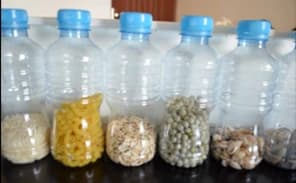
Children who like music will like these homemade shakers. Make them as heavy as your child likes and shake away along to a favourite piece of music while singing their favourite song.
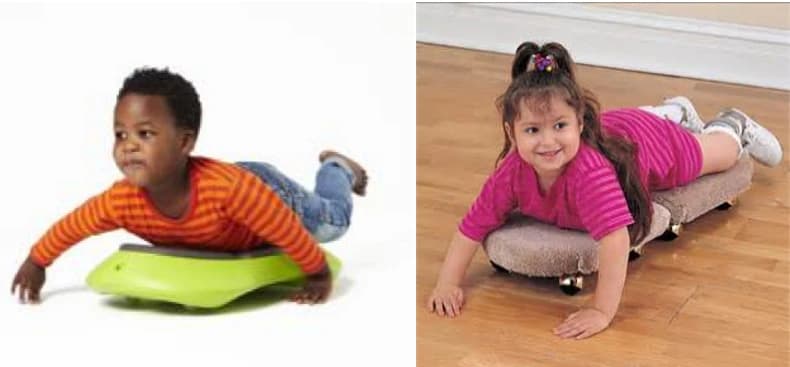
Get the child to play on their tummy, pushing up with their arms. Use a motivating toy or activity to keep the child in this position. This is also a good position to practice drawing in.
Carrying objects
- Shopping bags - Let your child help you carry when shopping when you are out.
- Weighted backpack - Let your child wear a backpack with some weight in it when you are out in public. Make sure the bag is not too heavy so that your child does not adopt a poor posture.
- Stacking or moving chairs/books - At school, let the child help with setting up/clearing away the room. Give them a task to do when they need proprioceptive input, e.g. let them move a box of heavy books for you.
- Filling up a watering can and letting the child water the garden.
Pushing or pulling objects and activities, such as...
- Toy shopping cart or shopping trolley when out shopping (rather than them sitting in the trolley).
- Laundry basket, toy vacuum, mopping or sweeping the floor and see what other household activities your child can help you with.
- Tug of war rope.
- Mop/sweep floor with a mop, broom and dustpan for kids.
- Raking leaves, dirt, etc., using a kids wheelbarrow.
- Pushing/pulling self or others on a jumbo scooter board on their tummy!
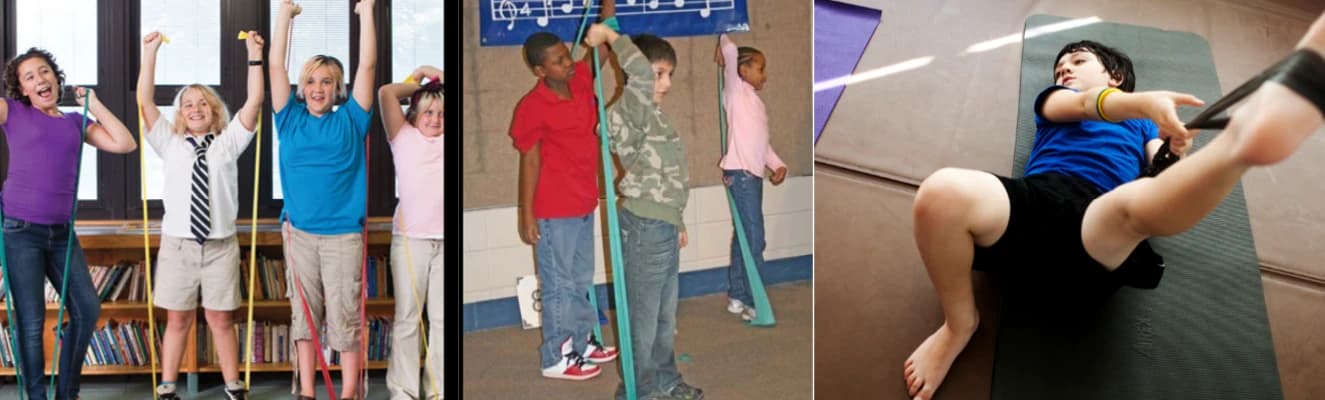
- Thera-Band - Stretch and pull against it with all body parts!
- Jumping and bouncing on/with items, such as on a trampoline, on an old mattress or soft area, into bean bag chairs, on a therapy ball (with adult assistance, of course), on a pogo stick.
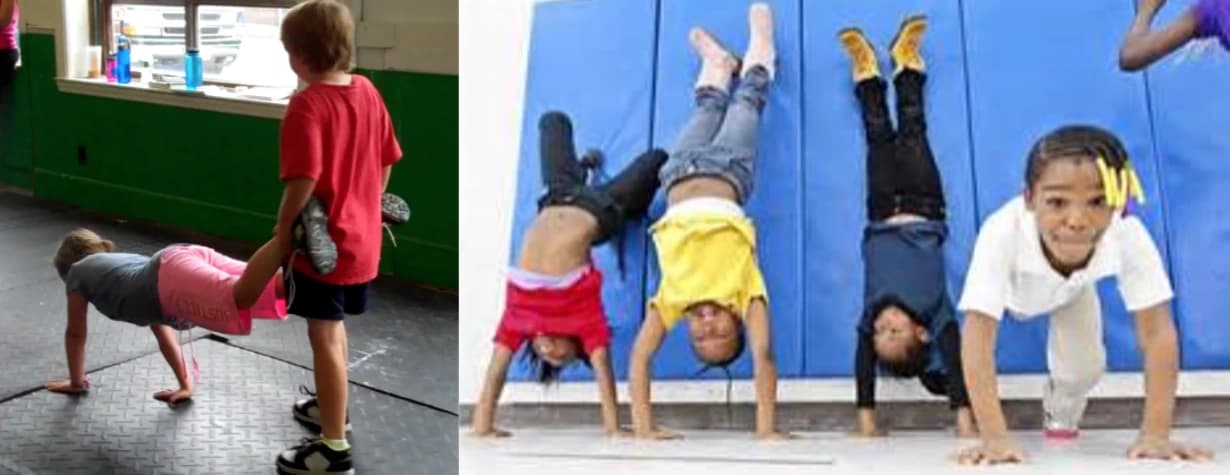
- Wheelbarrow walks, relays and handstands all make your child put weight through her upper limbs.
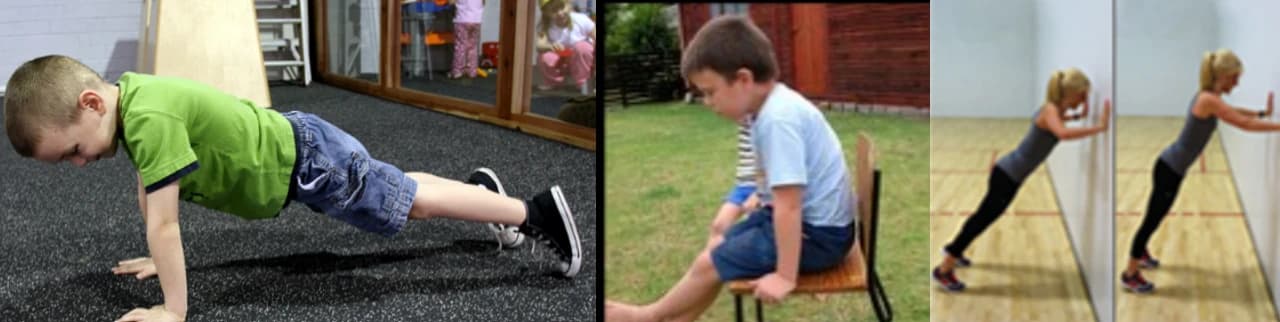
- Push-ups against a wall, floor or chair.
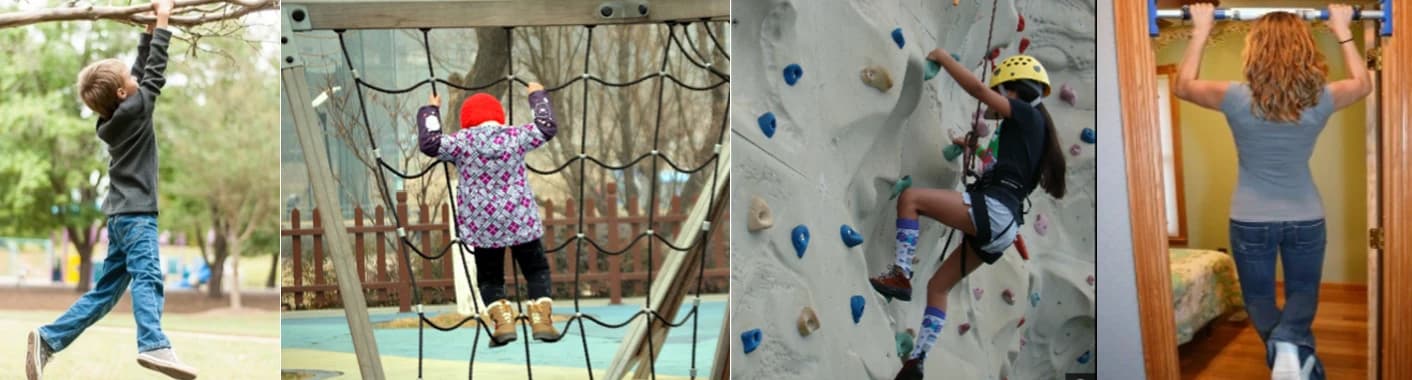
- Hanging and climbing are great proprioceptive activities!
- Some children love being in a body sock. These are made of a Lycra material so children can push against them and get proprioceptive feedback from their whole body. As the material blocks out the majority of visual stimuli (can still see through the material), some children find these really calming.
Sandwich/Squishing Activities
- Make a child "sandwich" between floor pillows or cushions.
- Roll the child up in a mat or a heavy blanket as a "hot dog".
- Give the child heavy blankets, weighted blankets, or sleeping bags (for children) at bedtime.
- Bear hugs.
- Firm towel dry after baths, wrap up tightly.
- Roll a giant gym/exercise ball on top of them while they lie on the floor.
Other things to try
Some children benefit from wearing weighted equipment. This is because the additional weight helps provide them with additional proprioceptive feedback. It is recommended that weighted blankets be between 8%-10% of the child's total body weight. Please always speak to your occupational therapist before using weighted equipment with a child.
Promoting attention and stopping children from rocking in their chairs.
Before learning activities, select some whole-body proprioceptive activities and some vestibular (movement) activities. This will prepare the brain for having to sit still.
Some children benefit from a "move n sit" cushion. This allows the child to have some movement and proprioception while remaining in their chair. Some children need more movement than provided by the "move n sit" and benefit from sitting on gym balls or gym ball chairs. Both of these allow the child to have a controlled amount of movement while they are learning.
The above chair has a move and sit cushion for vestibular input, and some Thera Band put around the legs of the chair. This is so the child can bang their legs against the Thera Band while they are sitting to get some proprioceptive feedback. Some children also find a lap weight and ankle weights helpful when sitting in a chair. Please always speak with your occupational therapist before using weighted equipment.
By Beth Smart - Specialist Occupational Therapist.
Other Useful Resources
- Video on sensory processing & auditory processing - On the Positive about Down Syndrome (PODS) Facebook group: "An overview about sensory processing and info around sound sensitivity, covering the following topics: The Ear, ENT & DS, Sensory Processing, Auditory Processing and Strategies to help."
- ot4kids - Private online courses for parents and teachers to learn the Sensory and Motor Fundamentals to improve children's pencil control through easy, fun activities. Courses aim to help parents and teachers be clear and confident about where their child needs to start and how to begin developing their pencil control to write. Examples are the 5-part online mini-series informing families about sensory processing, core stability and fine motor skills and treatment activities and the 4-week program where the OT goes through different activities in a progress pathway, with weekly live Q and As to support parents directly and access to a private facebook group for the families on the course to get support, designed for preschoolers and children getting ready for reception.